

When working with anti-detect browsers like ExitAnty, many users focus on profile setup but overlook the network layer. As a result, even with a correctly configured fingerprint, IP overlaps can still occur.

How Proxies Affect Anti-Detect Browsers
Each profile should operate as an independent environment. Proxies provide this isolation on the network level.
- Behavior starts to overlap when multiple profiles share the same IP
- Activity becomes easier to correlate
- The risk of technical limitations increases
Proxy selection is not just a setup step — it is part of the overall system architecture.
Types of Proxies
The main types used in anti-detect browsers:
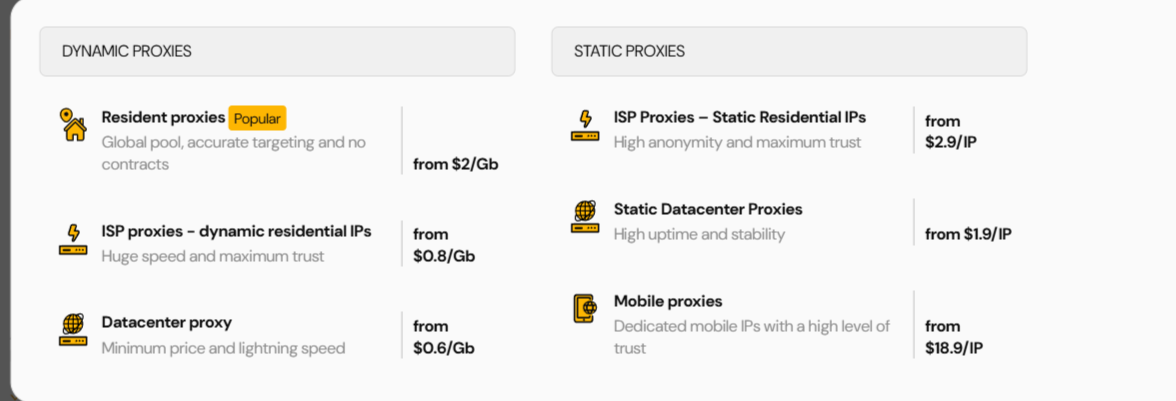
| Proxy Type | Key Feature | When Used |
|---|---|---|
| Residential | IPs from real devices | Scalable scenarios |
| ISP | Provider-based IPs | Stable profiles |
| Datacenter | Server-based IPs | Automation and testing |
| Mobile | Mobile network IPs | Specific use cases |
- Dynamic proxies: IP changes automatically at set intervals or per request, distributing traffic across multiple addresses.
- Static proxies: IP is fixed and remains unchanged, providing stable behavior for long-term profile usage.
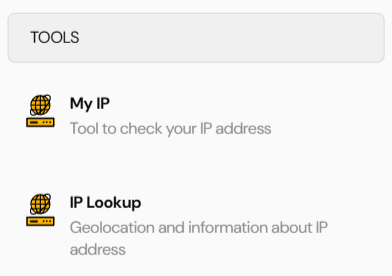
After setup, tools like My IP and IP Lookup help verify how the connection appears externally. MangoProxy includes these as supporting utilities within its infrastructure.
How to Choose Proxies for Your Task
Services like MangoProxy provide residential, ISP, datacenter, and mobile proxies within one infrastructure, allowing you to select the right type for each scenario.
1. For Long-Term Profiles
Static proxies: IP remains unchanged, so the profile operates within a consistent network environment. Suitable for scenarios requiring stable, continuous activity over time.
2. For Scalable Processes
Dynamic proxies distribute traffic across rotating IPs, balancing load and improving stability at scale.
3. For Automation
Datacenter proxies offer fast response times and predictable connections, suited for automated workflows and high request volumes.
4. For Region-Specific Tasks
Choose proxies with matching geography. The IP should correspond to the region you are targeting for consistent network behavior.
Use Cases
- Multi-account management: each profile runs through a separate proxy, reducing overlaps and simplifying management.
- Automation: proxies distribute requests and prevent overload. Avoid using one IP for all processes.
- Data collection: proper traffic distribution across IPs is essential at high request volumes.
- Testing: proxies allow verifying how services behave from different geographic regions.
The Role of Proxies in Infrastructure
Proxies act as an intermediate layer between the browser and external services.
- Separate traffic between profiles
- Support scaling of multi-account operations
- Make system behavior more stable and predictable
Practical Takeaways
- Using one IP for multiple profiles is a common and costly mistake.
- Lack of traffic distribution reduces overall system efficiency.
- High request frequency without proper rotation leads to instability.
Proxies do not operate in isolation — they are part of a larger infrastructure alongside the anti-detect browser and session management.
Conclusion
Choosing proxies for an anti-detect browser is not a matter of preference — it is a matter of task requirements.
Different proxy types solve different problems: stability, traffic distribution, or scalability. Understanding these differences helps avoid common mistakes and build a more reliable workflow.
MangoProxy offers residential, ISP, datacenter, and mobile proxies in one infrastructure. Use promo code EXITANTY for 8% off ISP static proxies. Learn more: mangoproxy.com
FAQ
- Do I need a separate proxy for each profile?
- Yes, this is a basic principle for stable operation.
- Should I choose static or dynamic proxies?
- It depends on the task: stability vs scalability.
- Does IP location matter?
- Yes, especially when working with region-specific services.
- Can I change proxies during operation?
- Yes, but consider how profile behavior may be affected.
- Which protocols should I use?
- HTTP and SOCKS5 — the choice depends on your use case.