

In paid traffic, the easiest place for budgets to leak is the payment layer: overspending, failed charges, messy reconciliation, and high coordination cost across a team. Vmcard (vmcardio.com) focuses on virtual cards + spend management so you can define rules at the card level first and then scale campaigns with more control.
It helps media buying teams control spend and raise daily limits while keeping campaigns stable through clearer fund allocation and operational risk controls.
What is Vmcard?
Vmcard is a virtual card issuance and management platform built for advertising and cross-border payment scenarios. You can create cards per project/account, apply limits, and allocate funds across teams and business lines for cleaner reconciliation.

- Enterprise-grade virtual card issuing and management (ads, subscriptions, tools, etc.)
- Balance allocation and top-up management (per team/project)
- Bulk card creation and naming conventions for scale
- Team and permission management for collaboration
- Transactions and exportable reports for accounting
Why it fits media buying teams
If you run multi-account operations, payment-side control often defines how safely you can scale. Typical benefits of Vmcard include:
- Split budgets by project/account to reduce overspend risk
- Reusable templates: replicate the same rules across multiple flows
- Fast damage control on anomalies (freeze/limits/card replacement)
- Cleaner reconciliation: one card per account/project makes spend easier to audit
- Supports team workflows: buyers, ops, and finance can work with clear boundaries
Spend control and daily limits
The core idea is to move budget control to the card layer: set rules and limits first, then scale.
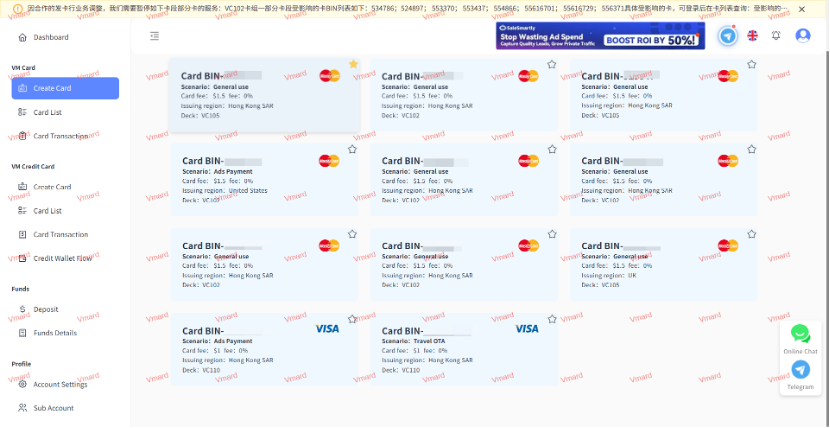
- Set daily/per-transaction/total limits per card (subject to platform capabilities)
- Quick freeze/unfreeze to stop unwanted charges
- Isolate funds per project/ad account to reduce chain-risk
- See balances and spend trends in one place to avoid manual tracking
How to get started
- Create an account and complete basic verification as required
- Top up or allocate balance to teams/projects via dashboard or API
- Create teams/roles and configure permissions or approvals if needed
- Issue cards (including in bulk) and set limit rules
- Attach cards to ad platforms (Google/Facebook/TikTok, etc.)
- Export reports regularly for reconciliation and budget optimization
Entry point: vmcardio.com
Practical tip: pair it with ExitAnty workflows
If you run multi-account setups in ExitAnty, a simple rule works well: map “one profile / one ad account” to “one card”. It makes troubleshooting, auditing, and risk control much easier.
- Use one card per ad account or per business line to track ROI and spend
- Align card naming with ExitAnty profiles/projects (e.g., GGL-US-01 / FB-EU-02)
- Start new accounts with lower limits and scale up gradually after stability
- Review declines/failed payments regularly and adjust limits or rotate cards when needed
- Enable platform alerts/risk tools (if available) to catch anomalies early
Vmcard is essentially a “finance OS” for media buying: it connects budgets, cards, permissions, and reporting into one workflow so scaling doesn’t depend on spreadsheets and ad-hoc rules. If you run multi-account traffic or work in a team, standardizing the payment layer often improves both stability and scale speed.
Learn more and get started: Vmcard (vmcardio.com)